What Did Jane Austen Look Like? Every Known Portrait
By Jason Guo · Updated July 5, 2026
No portrait of Jane Austen was painted from life except a small, unfinished sketch by her sister Cassandra around 1810. Every other image — the 1870 "Victorianized" engraving, the Rice Portrait, waxworks, and banknote design — is a later artist's interpretation, not a documented likeness.
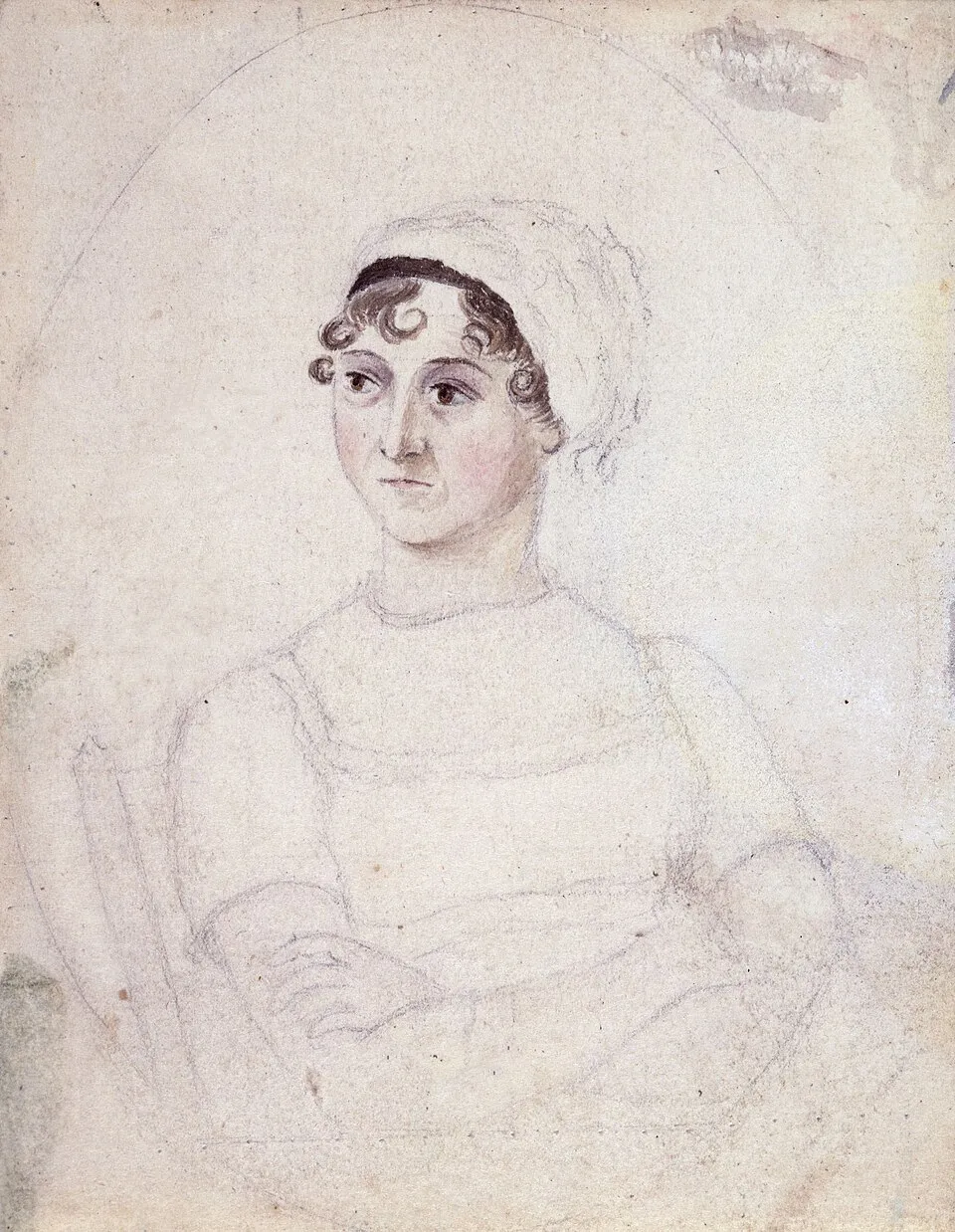
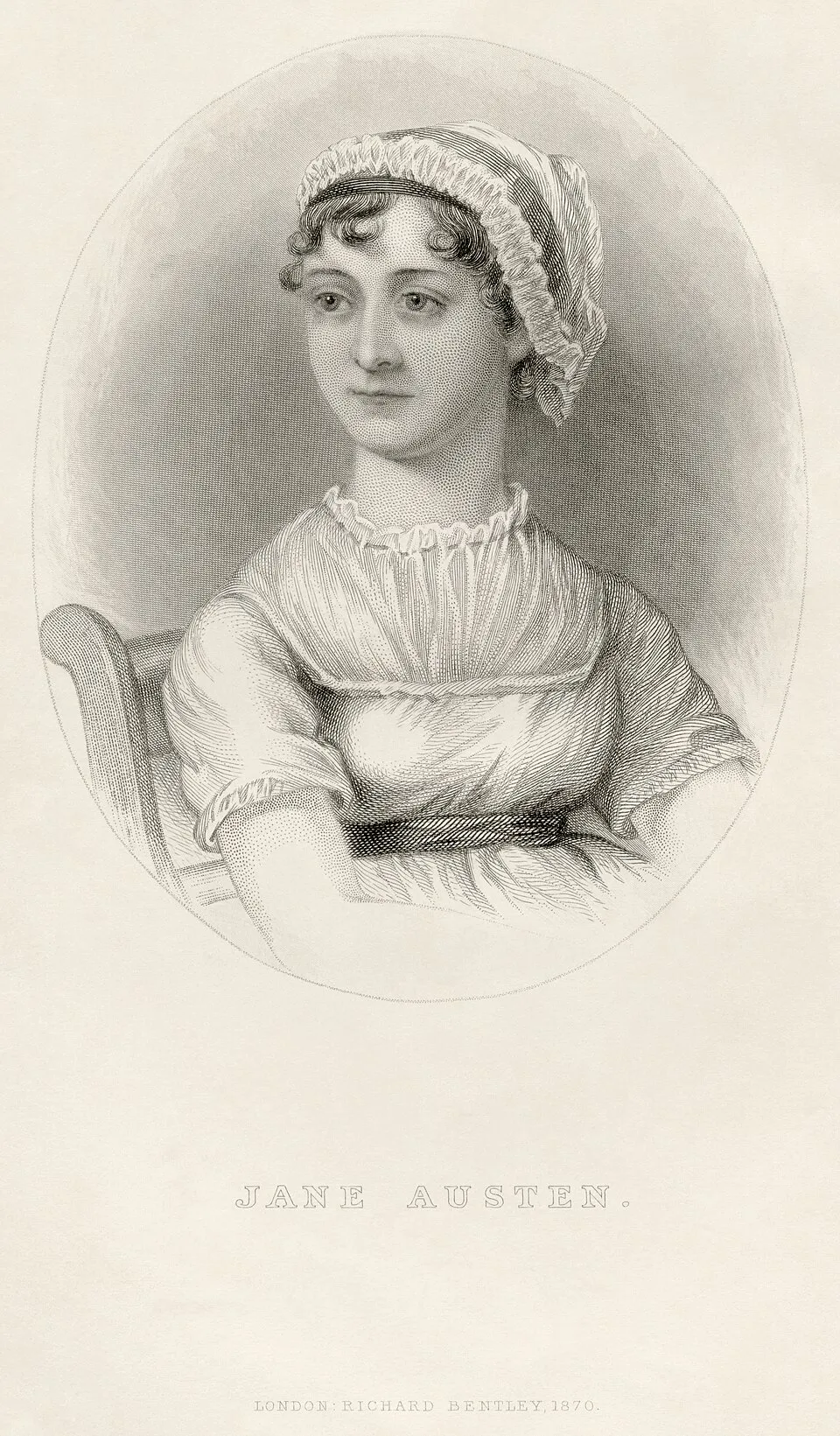
Ask what Jane Austen looked like and the honest answer is: we mostly don’t know. Exactly one portrait was made from life, it was never intended for publication, and its own artist wasn’t entirely happy with it.
The only life portrait
Around 1810, Cassandra Austen made a small pencil-and-watercolor sketch of her sister — arms crossed, an unglamorous, slightly disapproving expression. It survives in the National Portrait Gallery. Family members who remembered Jane in life reportedly considered it a poor likeness, but it is the only image with a solid claim to have been drawn from the actual woman.
The image everyone knows
In 1869, Jane’s nephew James Edward Austen-Leigh commissioned an engraving for his Memoir of Jane Austen, based on Cassandra’s sketch but reworked by a professional illustrator: larger eyes, fuller face, tidier hair, a gentle Victorian softness the original sketch does not have. This idealized version — not Cassandra’s original — is the image reproduced on English £10 notes (2017–2022), book covers, and tea towels worldwide.
The Rice Portrait controversy
A pastel portrait owned by the Rice family, depicting a girl in a white dress, has been promoted since the 1940s as a possible portrait of a teenage Jane Austen. The National Portrait Gallery and most costume historians date the dress style to the early 1800s — too late for Austen at the apparent age of the sitter — and decline to accept the attribution. The debate remains unresolved and occasionally resurfaces in the press.
What contemporaries said
Her brother Henry described her as having “the eye … of a peculiar character” and a figure “rather tall and slender.” Her niece Anna recalled brown hair and hazel eyes, a clear complexion, and “a bright, but not a pink colour.” None of this can be verified against an image we can trust — it is testimony, not evidence.
Other claimed likenesses
Beyond Cassandra’s sketch and the 1870 engraving, a handful of other images circulate with varying degrees of credibility. A silhouette inscribed “L’aimable Jane” (“the amiable Jane”) is sometimes proposed as a likeness, though its attribution rests on a handwritten caption rather than any documented provenance connecting it to the family. Waxworks — including a well-publicized reconstruction built for the 200th anniversary of her death using forensic techniques and family descriptions — and the countless illustrative portraits created for book covers and merchandise are frankly speculative reconstructions, useful for giving readers a face to imagine but carrying no independent evidentiary weight of their own.
Why the uncertainty matters
The gap between the real, undocumented Jane Austen and the softened, marketable image on tea towels and banknotes is itself a small case study in how reputations get built after death. The 1870 memoir that commissioned the idealized engraving was written by a nephew keen to present a beloved maiden aunt to Victorian readers, not to preserve a precise visual record — the same impulse, in miniature, that shapes many of the romanticized screen biographies of her life. Readers encountering the familiar, gentle-faced “Jane Austen” on a book cover are almost always looking at a 19th-century reinterpretation once removed from a sketch her own family didn’t think was very good to begin with.
Height, dress, and daily appearance
Beyond questions of portraiture, family letters give a few scattered physical details: Austen was reportedly of above-average height for a woman of her time, with a light, quick step remembered fondly by nieces and nephews who recalled her playing with them energetically. Surviving accounts describe her dressing plainly and practically rather than fashionably, consistent with a household of limited means for most of her adult life — a detail worth remembering against the elaborate costuming of her screen adaptations, which tend to dress her as elegantly as her own fictional heroines rather than as the modestly-dressed clergyman’s daughter she actually was.
Frequently Asked Questions
Is there a real photo or painting of Jane Austen?
No photograph exists — photography was not invented until decades after her death. The only portrait made from life is Cassandra Austen's small pencil-and-watercolor sketch, now in the National Portrait Gallery, London.
Why does the "famous" Jane Austen portrait look different from the sketch?
The widely reproduced engraving (used on banknotes and book covers) is a 1869 "improved" reworking commissioned by her nephew, softened and idealized for Victorian taste — not an independent likeness.
What is the Rice Portrait?
A pastel portrait owned by the Rice family that some believe shows an adolescent Jane Austen. Most art historians and the National Portrait Gallery dispute the identification and date the painting's style to slightly after Austen's supposed sitting age.